
Evaluate gas at its source.
Identify whether gas otherwise flared or vented could support useful on-site generation. Supply, rights and the existing emissions baseline need site evidence.
Immersion-cooled mining.
Bitcoin and Zcash, designed together.
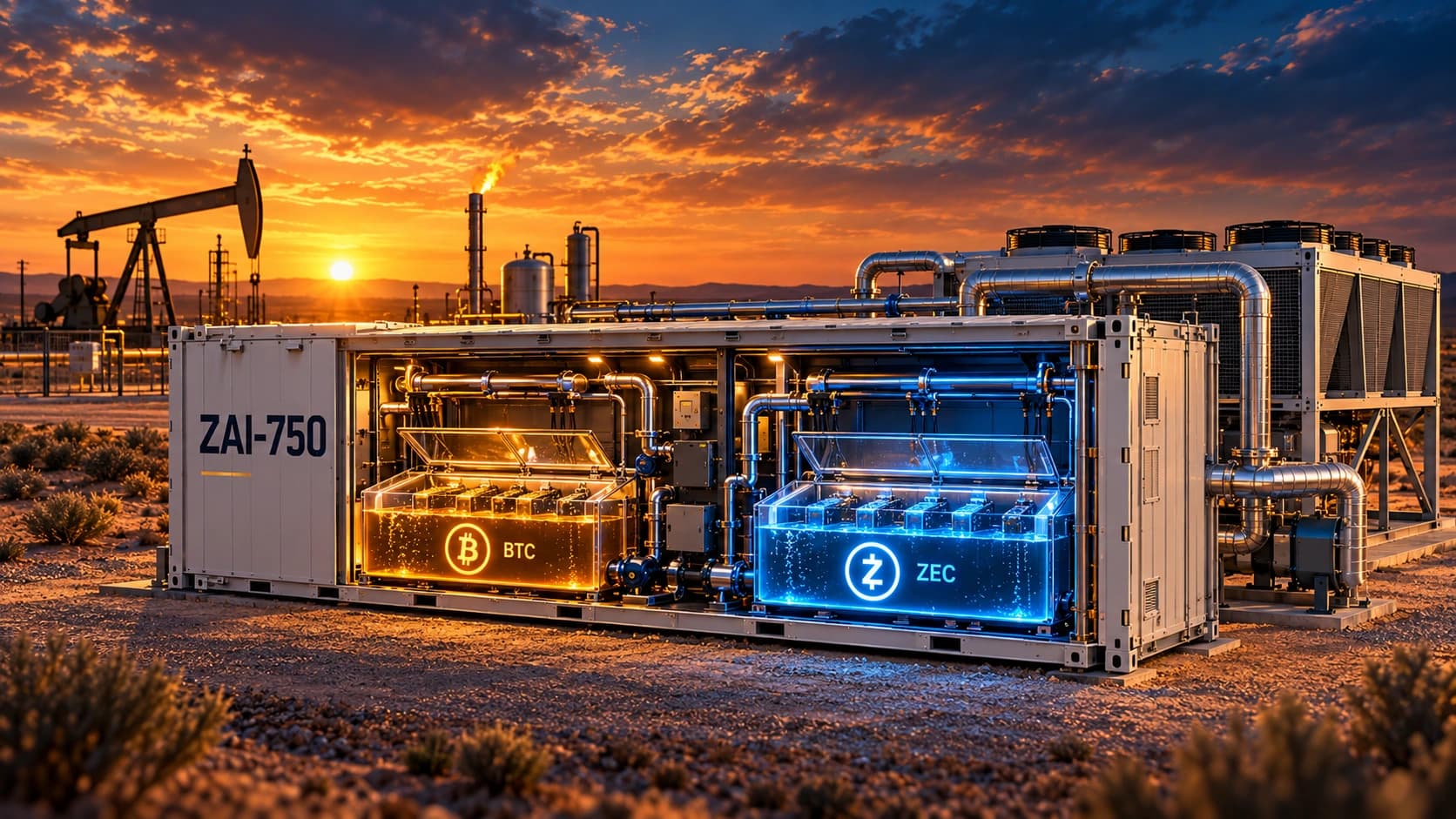
ZAI-750 concept visualisation · BTC + ZEC immersion cooling · not an installed site or a validated equipment design.
Mining hardware immersed in dielectric fluid, with heat carried to an external cooling loop.
Target concept balance. The allocation basis and final equipment sizing will be defined in engineering.
Flow, composition, pressure, access and gas-use rights need direct confirmation. Historical production alone does not establish a usable supply.
Energy at its source, immersion at the hardware, and evidence behind every environmental claim.
Identify whether gas otherwise flared or vented could support useful on-site generation. Supply, rights and the existing emissions baseline need site evidence.
Dielectric fluid takes heat from the mining hardware to an external cooling system. Pumps, heat rejection and fluid management are part of the design.
Compare the site baseline with generator emissions, methane leakage and total energy use. Record water use and cooling-fluid handling before claiming a benefit.
These are design objectives, not measured ZAI-750 outcomes. Immersion cooling alone does not establish a lower environmental impact; any claim requires a defined comparison and site measurements.
U.S. DOE · Energy-efficient data center design and U.S. EPA · Methane emissions from the oil and gas sector. Accessed October 8, 2026. General design and measurement resources; neither verifies this ZAI concept, endorses it, nor establishes its environmental performance.
¹ Shared by cooling, other auxiliaries and any tuning. Performance and power draw must be measured together.
The 498.3 kW figure describes the earlier reference fleet; it does not validate the new 50/50 allocation target. Final immersion-compatible equipment, layout and loads require engineering validation within the operating cap. BTC and ZEC performance are measured separately; this target does not establish equal power consumption, machine counts or returns. No ZAI-750 installation is operating yet.